Showing posts with label The Atlantic. Show all posts

Wednesday, 4 November 2020

A Dreadful New Peak for the American Pandemic

Editor’s Note: The Atlantic is making vital coverage of the coronavirus available to all readers. Find the collection here.

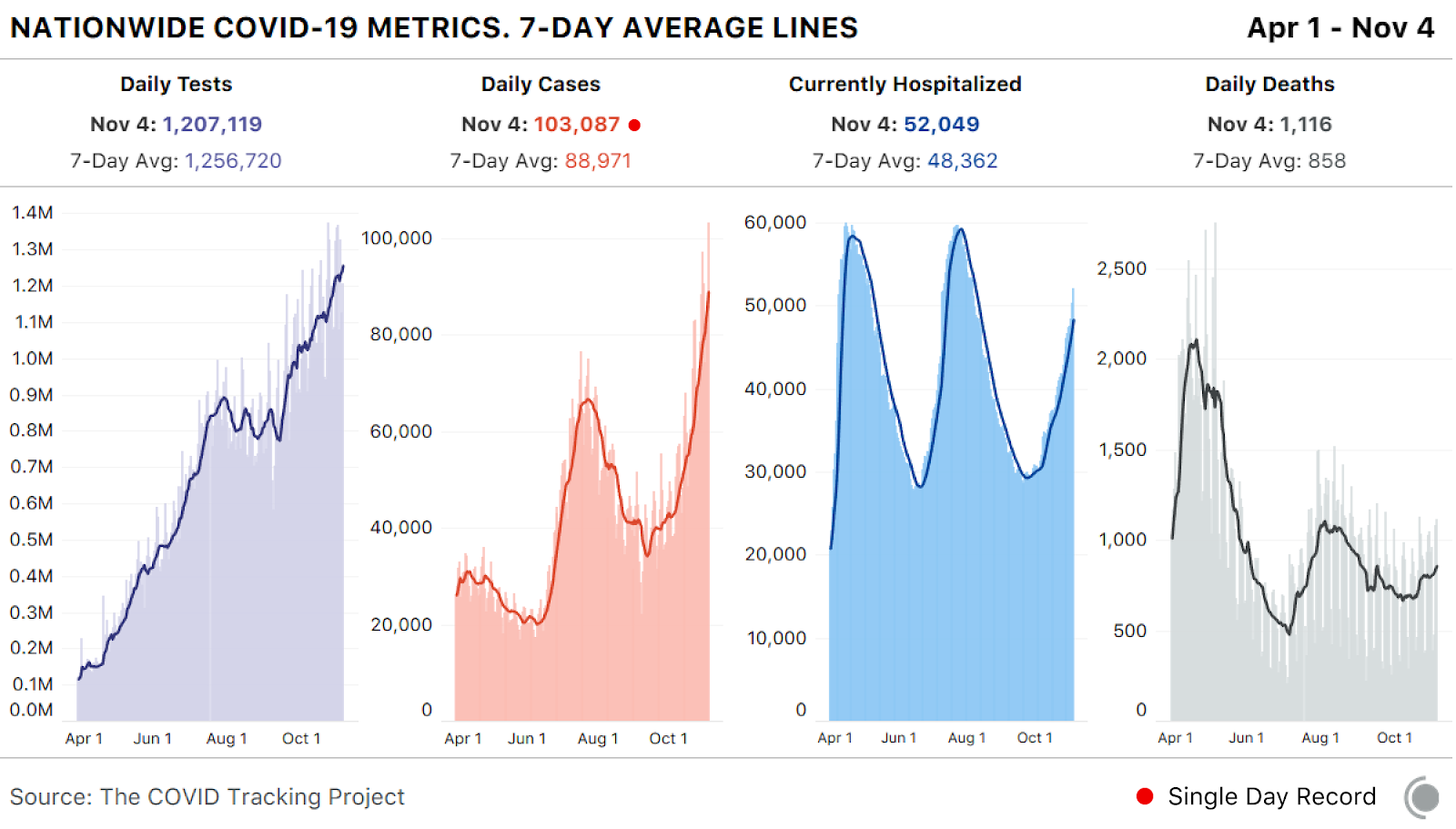
The United States reported 103,087 cases of COVID-19 today, the highest single-day total on record, according to the COVID Tracking Project at The Atlantic. It marks the first time that the country—or any country in the world, for that matter—has documented more than 100,000 new cases in one day.

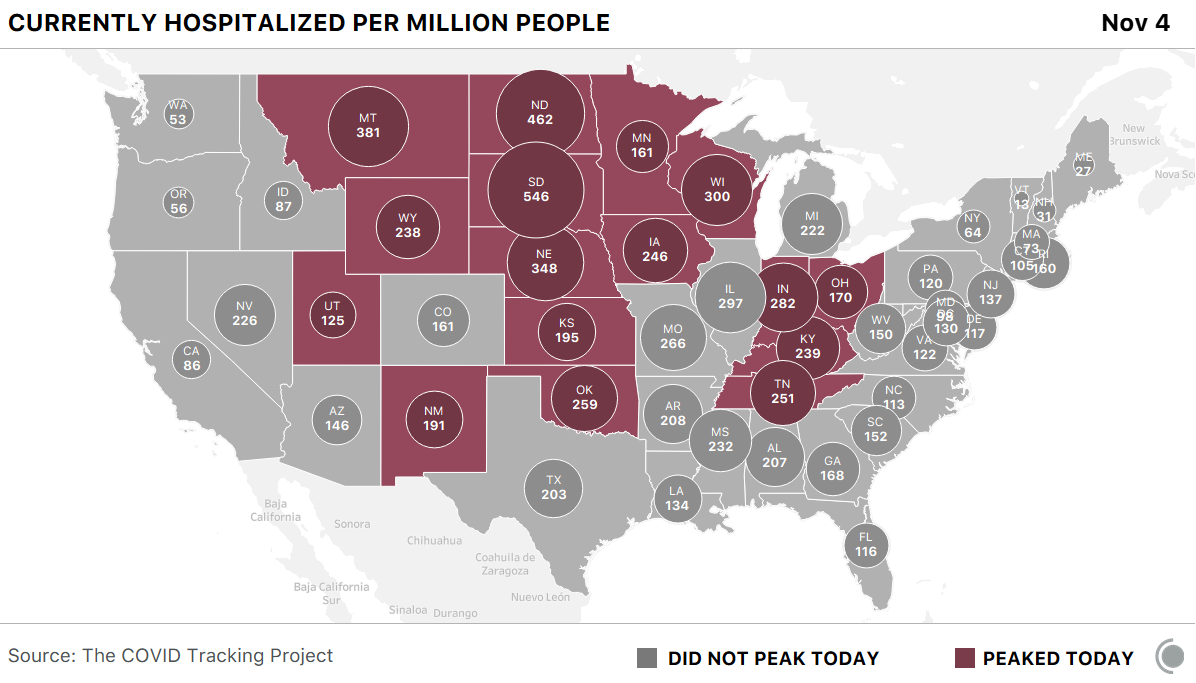
At the same time, states reported that more than 52,000 people are hospitalized with the coronavirus, the highest level since early August. The number of people hospitalized nationwide is increasing faster in November than it did in October, and—over the past 10 days—their ranks have risen by about 1,000 people a day.

The record officially marks what was already clear: As winter nears, the country’s third surge of infection is dangerously accelerating in almost every region of the country. This is the reality that the United States is facing, regardless of who will become its next chief executive: A deadly respiratory pandemic is spiraling out of control, and the number of hospitalized people—and deaths—is certain to rise over the next several months.

The unhappy milestone has been months in the making. On the final day of June, as states in the South and Southwest brimmed with infection, Anthony Fauci, the nation’s top infectious-disease expert, warned that the U.S. could soon see a 100,000-case day. His prediction came several months early. Three weeks later, the country’s summertime surge peaked at about 75,000 cases in one day. But that count likely fell far short of actual infections: In the hardest-hit states, such as Arizona, tests were so scarce that symptomatic doctors could not even test themselves.

By early September, the pandemic faded to its lowest level since June, with the country reporting only about 34,000 cases a day. Experts warned that the winter months could prove catastrophic, but President Trump took a victory lap. The country was “rounding the final turn” on the pandemic, he announced at a Pennsylvania rally on September 3, a line he echoed at the White House a week later.

In fact, the country was already riding a third wave of infection. By then, cases and hospitalizations were rising in the upper Midwest and Great Plains; North Dakota and Wisconsin busted through their all-time records. Then the Mountain West exploded, and Utah, Montana, and Idaho set new records. Then finally the Northeast, which had been lacerated in the spring, saw cases tick up.

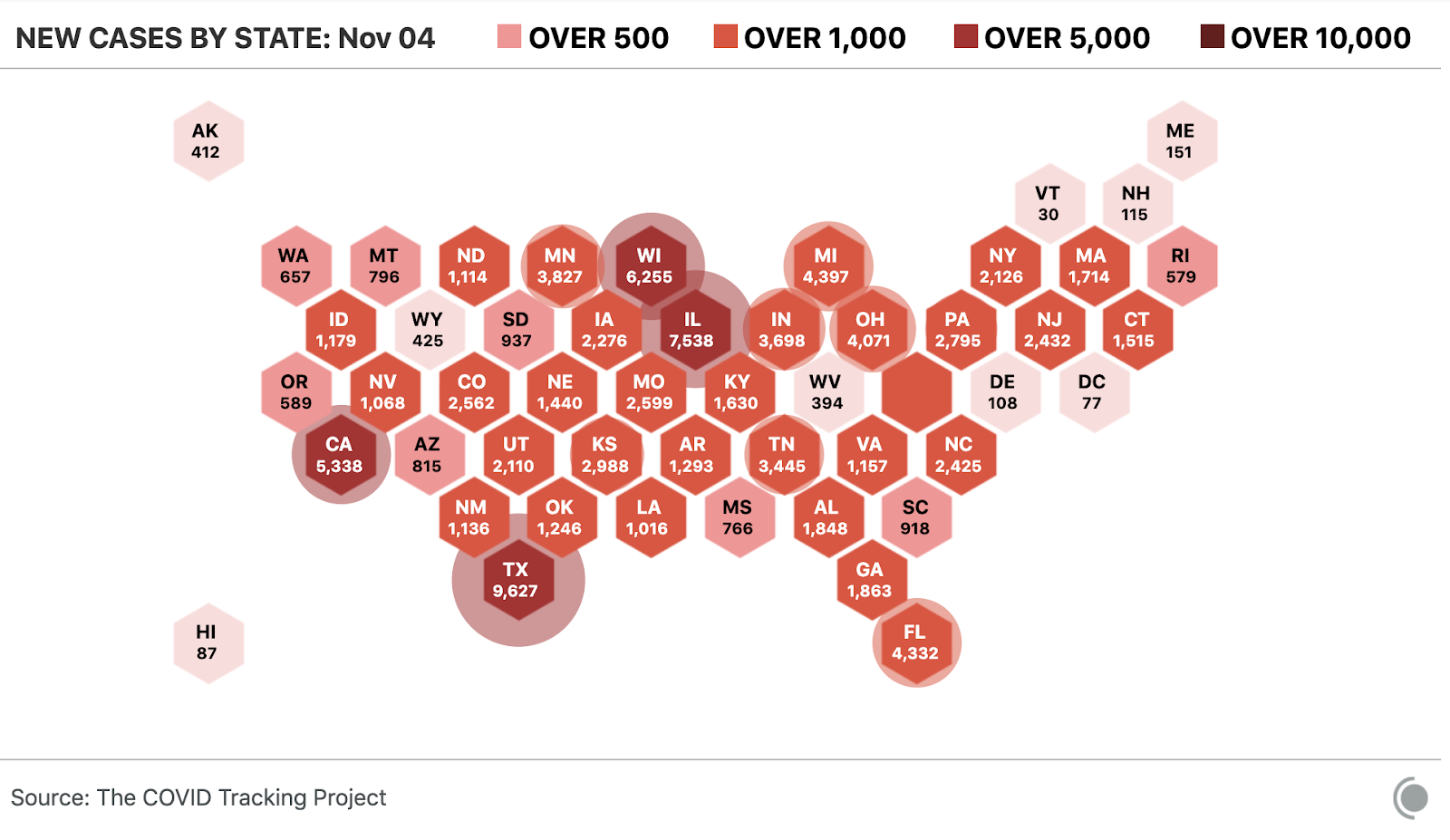
Now the country has reached the 100,000-mark that Fauci predicted. Today, 34 states reported more than 1,000 new cases apiece, forming a single belt of infection from Massachusetts to Nevada. Sixteen states saw a record number of their residents hospitalized with the virus. More than 47,000 Americans have died since Trump’s Pennsylvania rally two months ago.

Today’s six-figure record reflected high levels of infection across the country, including in some of the most populous states. Texas reported 9,600 new cases, with nearly a third coming from El Paso, where hospitals are above capacity. Indiana has set a single-day record with 3,698 new cases. Illinois recorded 7,500 new cases, and its number of hospitalizations increased.

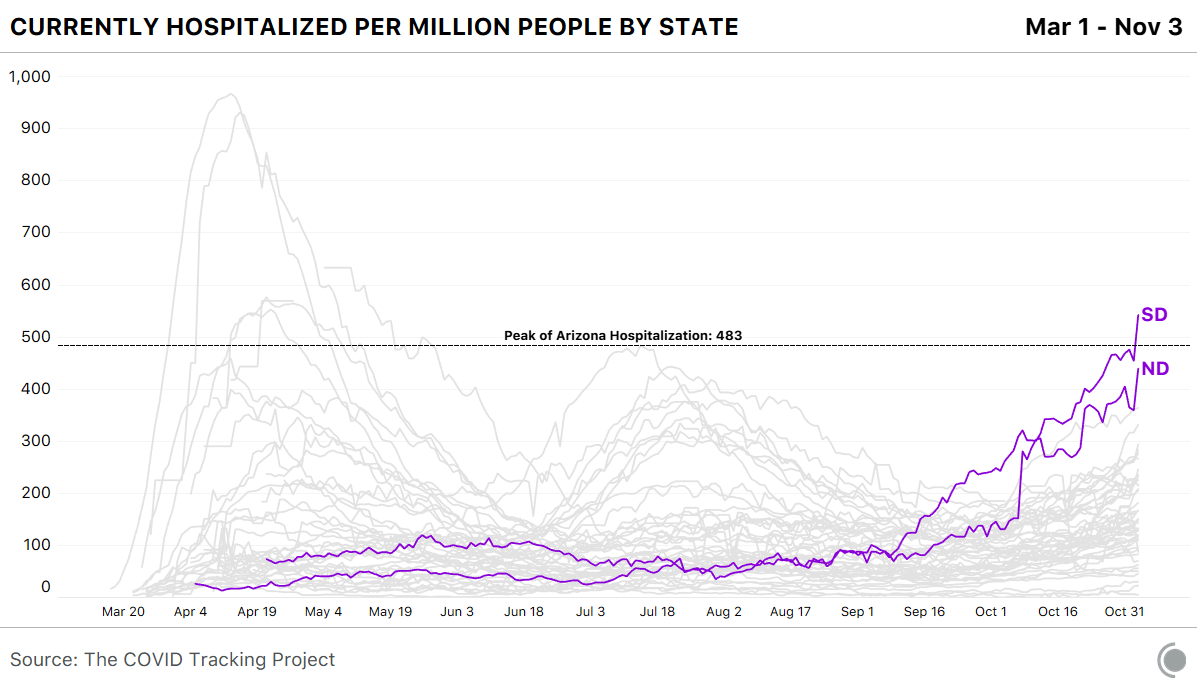
In addition, South Dakota—and likely soon North Dakota—will report more hospitalizations per capita than Arizona saw in its summertime surge.

No matter who wins the presidential election, it is virtually guaranteed that the next several months will be among the darkest of the pandemic. Hospitalizations are virtually certain to rise, and cases could spread further if Americans travel for Thanksgiving. And even if a vaccine were to be approved this month, it would likely not be deployed widely enough to bestow protective immunity for most at-risk Americans until well into the new year, Scott Gottlieb, who led the Food and Drug Administration from 2017 to 2019, has said.

The next president will take power in a country where 100,000 cases forms a new baseline. It is November 4, 2020, and the United States is not a healthy country.


from The Atlantic https://ift.tt/2TWDHxw

The Atlantic Daily: 3 Things the Election Revealed

Every weekday evening, our editors guide you through the biggest stories of the day, help you discover new ideas, and surprise you with moments of delight. Subscribe to get this delivered to your inbox.

GETTY

The presidential contest isn’t resolved. But the 2020 election has already proved revealing. Keep reading for three things we’ve gleaned from the results so far.

1. This country remains deeply divided.

“The clearest message of this week’s complicated election results is that the trench is deepening between red and blue America,” Ronald Brownstein writes. Meanwhile, George Packer argues that it’s time to face a bitter truth: “We are two countries.”

2. The South has already changed.

Jaime Harrison lost to Lindsey Graham. “But his campaign allowed Democrats to imagine what was possible in his home state; it reminded national leaders why they should not write off the region,” Adam Harris writes.

3. Polling is in crisis.

“After two huge presidential flops, pollsters have lost the confidence of the press and public,” David A. Graham writes.

RAEDLE / GETTY / THE ATLANTIC

The race is still close, but Joe Biden’s path to victory looks a little clearer.

When should you expect results from the remaining states? Our staff writer Derek Thompson offers a useful breakdown.

Arizona: Expect two batches of results: one around 9 p.m. ET tonight and another just after midnight.

Biden currently leads by about 90,000 votes, but networks are torn on whether to call the state, given uncertainty about the partisan lean of the outstanding ballots.

Georgia: We could get a complete answer tonight.

Key counties say they aim to wrap up their counts around 9 p.m. ET. Trump leads here by about 80,000 votes, but the remaining ballots are mostly in heavily Democratic areas, giving Biden narrow odds to flip the state.

Nevada: Check back tomorrow.

We should get a big update. Biden currently leads by only 7,000 votes, but the remaining ballots are expected to lean Democratic.

Pennsylvania: Check back tomorrow.

The secretary of the commonwealth said today that she expects full results “significantly sooner” than Friday. Well, today’s Wednesday, and we don’t seem to be particularly close to a full count in the state. Temporally speaking, that leaves Thursday as the only day sooner than Friday. Trump’s big lead in the state could be endangered as hundreds of thousands of outstanding mail ballots from cities such as Philadelphia and Pittsburgh are likely to go overwhelmingly to Biden.

North Carolina: Check back next week.

Mail-in ballots in North Carolina have until November 12 to arrive, and we might not know the winner of this state until mid-November.

GETTY / THE ATLANTIC

What to read if … you’re feeling angsty about the Electoral College:

This piece by former George W. Bush speechwriter David Frum is for you: “It should not take the largest voter turnout in U.S. history to guarantee that a president rejected by the majority of the American people actually stops being president.”

What to read if … you’re worried that Donald Trump won’t accept the results if he loses:

Our staff writer Barton Gellman warned weeks ago that the president could dispute the election. Here’s what he says may happen next.

What to read if … you find yourself stress-refreshing forecast sites:

Some advice: “A good mental-health question to ask yourself is: What am I actually gaining from trying to figure this out now?”

What to read if … you need a break from it all:

Let the wonders of the universe make you feel small. Or sink into the two-hour escape of a comfort movie. And if you’re feeling guilty about tuning out for a bit, remember: You have the permission of our happiness columnist.


Did someone forward you this newsletter? Sign up here. Need help? Contact Customer Care


from The Atlantic https://ift.tt/3epz7Bz

Tuesday, 20 October 2020

The Atlantic Daily: What Trump Revealed About the World Order

Every weekday evening, our editors guide you through the biggest stories of the day, help you discover new ideas, and surprise you with moments of delight. Subscribe to get this delivered to your inbox.

ROHAN HANDE

President Donald Trump held up a mirror to the American foreign-policy establishment, two of our writers argue, forcing it to reckon with a broken status quo.

“Trump may have no idea that he is revealing any of this; he may not even agree with the things he is revealing,” Tom McTague and Peter Nicholas write. “Yet he is revealing them nonetheless.”

Tom and Peter, who are based in London and Washington, D.C., respectively, conducted several dozen interviews with experts in the United States and in Europe, as well as current and former administration officials. Below are three of their takeaways from the past four years of Trumpism:

1. Trump revealed a new world order.

After decades of international adventures that have left the U.S. overstretched, overwhelmed, and overburdened, it was Trump who blurted out the uncomfortable truth: American foreign policy was failing, and had been for decades.

2. His foreign policy remains driven by naïveté …

Time and again, we were struck by the assessment, related by multiple sources in separate meetings, that Trump’s most important characteristic when it came to foreign policy was not what his critics charge—his amorality or vindictiveness, his lack of success or diplomatic vandalism. They said … [it] was his naïveté.

3. … and, practically speaking, empty.

Trump, even as he calls out the American-built world order for its failures, has no coherent plan to replace it, no system that would work better. He isn’t trying to reorder the world; he’s just pointing at the order and calling it naked. Or as [Fiona Hill, Trump’s former senior director on European and Russian affairs at the National Security Council] put it: “He’s a chaos agent.”

Continue reading their piece.

Further reading: These world leaders want Trump to win the election, Yasmeen Serhan reports.

SHUTTERSTOCK / THE ATLANTIC

14 days remain until the 2020 presidential election. This is today’s essential read:

The far-right misinformation ecosystem is preparing for the possibility that Trump might lose, Renée DiResta reports.

“Its goal is simple—to preemptively delegitimize any outcome but a clear victory by the incumbent.”

Want to better understand the ongoing coronavirus outbreak? Here are four key stories from our team:

Stuck on what to stream? Let us help:  

’Tis the season for a fright. Our critic David Sims selected 25 of the best horror films, ranked by scariness.

Today’s break from the news:

“Our boyfriends, our significant others, and our husbands are supposed to be No. 1. Our worlds are backward.” Rhaina Cohen writes about people who consider a friend to be their life partner.


Did someone forward you this newsletter? Sign up here. Need help? Contact Customer Care.


from The Atlantic https://ift.tt/2IMkVGR

Thursday, 15 October 2020

The Atlantic Daily: Why the Climate Story Is So Exciting Right Now

Today, The Atlantic launched Planet, a new section devoted to climate change, along with The Weekly Planet, a new newsletter written by Robinson Meyer. He also writes today’s edition of the Daily, explaining why the climate story is so exciting right now.

PHOTO-ILLUSTRATION BY NICO KRIJNO

I’ve been covering climate change at The Atlantic for five years. There’s still one question I get more than any other: Are you hopeful? At this point, honestly, I find the question to be a little beside the point: If you don’t want the planet to warm, you should work to reduce carbon pollution regardless of whether you’re hopeful about the overall outcome.

Many things in the world aren’t going well, to put it mildly. But the fight against climate change got some excellent news this week.

The International Energy Agency announced, in its enormously influential annual report, that solar energy is now the “cheapest electricity in history.” At the same time, it substantially downgraded its forecast for coal, saying that the fuel source will soon enter a prolonged and irreversible decline. That means global carbon pollution could peak in the next several years—though, without further policy, it will not decline as rapidly as needed to avoid catastrophic global warming.

But in the past few years, the outlook has brightened—even as the disastrous consequences of climatic upheaval have gotten worse. For years, the goal of climate policy was to make renewable energy cost-competitive with fossil fuels. Now that’s a reality.

In the next few weeks and months, we’ll learn what kind of policy such breakthroughs will enable—and what new ideas and tools we still need along the way. If that sounds interesting—or even if you wish you spent more time every week keeping up with climate change—please subscribe to The Weekly Planet.

More from our new Planet section:

SERGIY BARCHUK

One question, answered: Are gas stoves bad for you?

Our science editor Sarah Laskow explains:

About a third of American households rely on natural gas to cook, and although starting a small gas fire in the kitchen might seem mundane, it’s surprisingly dangerous to human health. The science journalist Sabrina Imbler looked into this for us, and concluded that anyone who can afford to avoid cooking with gas probably should.

The main problem is that gas stoves spew pollution inside the house, at levels that would be illegal outdoors. One of these chemicals, nitrogen dioxide—which is also found in car exhaust—can cause people with respiratory issues to cough and wheeze, and people without respiratory issues to develop them.

Gas stoves also require buildings to have gas lines, which require extensive gas infrastructure. That setup helps keep residential areas from switching over entirely to renewable energy.

Electric stoves do use more energy, but they do not spew noxious chemicals into your kitchen. And a number of chefs promised that an induction stove can do almost anything a gas stove can. (They were, however, divided on the subject of stir-fry.)

Read Sabrina’s full piece.

19 days remain until the 2020 presidential election. Here’s today’s essential read:

Barack Obama is “an arena politician, strongest in front of a crowd cheering for him.” That’s not an option this year, so he’ll campaign for Joe Biden and Kamala Harris in other ways, Edward-Isaac Dovere reports.

Today’s break from the news:

Speaking of our extraordinary planet: Take a moment to browse this inspiring collection of wildlife photography.


Did someone forward you this newsletter? Sign up here. Need help? Contact Customer Care


from The Atlantic https://ift.tt/3dDrcAc

Wednesday, 14 October 2020

The Atlantic Daily: We Can Stop the COVID-19 Fall Surge

Every weekday evening, our editors guide you through the biggest stories of the day, help you discover new ideas, and surprise you with moments of delight. Subscribe to get this delivered to your inbox.

GETTY / THE ATLANTIC

There’s no point in avoiding the obvious: Cases are rising fast. The winter looks bad.

But weary Americans may take comfort: This time, we know more. The coming season doesn’t have to be a catastrophe.

Keep reading for some practical advice on managing this scary period.

JULIAN MONTAGUE

One question, answered: A concerned parent asks on behalf of their school-age daughter: How dangerous are woodwinds?

James Hamblin responds in his latest “Paging Dr. Hamblin” column:

Although there are no clearly documented cases of coronavirus transmission via woodwind, there is a lot of evidence of the benefit of kids studying musical instruments, and taking part in team-based competition. Even during a pandemic, immersing kids in the arts isn’t an indulgence.

Continue reading. Every Wednesday, James takes questions from readers about health-related curiosities, concerns, and obsessions. He has also answered:

Have one? Email Jim at paging.dr.hamblin@theatlantic.com.

20 days remain until the 2020 presidential election. Here’s today’s essential read:

David Frum argues that America wouldn’t survive a second Trump term.

Today’s break from the news:

The ousted WeWork CEO Adam Neumann offers a lesson in how to get rich by losing lots of money.


Did someone forward you this newsletter? Sign up here.


from The Atlantic https://ift.tt/2Fst1mG

Friday, 9 October 2020

The Atlantic Daily: A Nonpolitical Reading List

Every weekday evening, our editors guide you through the biggest stories of the day, help you discover new ideas, and surprise you with moments of delight. Subscribe to get this delivered to your inbox.

JAN BUCHCZIK

The past few weeks have brought an almost unfathomable surge of news.

Although it’s important to stay abreast of the very real, and very serious, threats to our democracy, our happiness columnist, Arthur C. Brooks, warns against gorging on all things political from now until the election.

“For quality of life’s sake—yours and others’—you would do well to put boundaries around the time and emotional energy you devote to politics this fall,” he writes.

To that end, you’ll find a collection of nonpolitical Atlantic stories. We hope they offer you a brief respite from the news cycle.

1. What does it really mean to “free” Britney Spears?

Our Culture writer Spencer Kornhaber takes a pop-princess-filled look at the complexities of sexism and fame, and the meaning of liberation.

2. The pandemic has made almost every relationship long-distance—and that’s a good thing.

The current crisis, Eva Hagberg argues, “offers an opportunity to decouple good relationships from physical intimacy and to open up other ways for friendships to flourish.”

3. A journalist became a poker champion in just one year.

Maria Konnikova was a psychologist and writer who knew almost nothing about the card game. Then she trained with one of the world’s best players.

4. Why are we afraid of bats?

Rebecca Giggs explores how we know—and how we learn—what to fear.  

5. A woman once smuggled her boyfriend out of prison in a dog crate.

Sometimes people ask Toby Dorr if she regrets what she did. She always says regrets are a waste of time.

6. For the fiction lover: Nicole Krauss’s new short story considers manhood through the eyes of a woman.

It begins: “My boys are standing at the edge of the jetty, and either they will jump or they won’t jump.”

7. A fake baby is born. Here’s how—and why.

For years, women on the internet have been writing conspiracy theories about celebrity pregnancies, Kaitlyn Tiffany reported as part of our “Shadowland” project. What sparks them?

(COURTESY OF NETFLIX)

Watch

I asked our critic David Sims to pick a few movies worth streaming online this weekend. He chose these five:

1. Dick Johnson Is Dead (Netflix)

This documentary is “a strangely satisfying, yet bittersweet watch in this dark time,” David writes.

2. I’m Thinking of Ending Things (Netflix)

“There’s a weird thrill to getting lost inside this movie, only so you can study every odd detail from new angles, over and over again,” says David.

3. Bill & Ted Face the Music (rent online)

The movie “is very funny, and very sweet, and yes, I may have even cried a little at the end,” the writer Devin Gordon confessed.

4. Boys State (Apple TV)

This documentary about teenagers running a government simulation in Texas is “both inspiring and occasionally terrifying,” David warns.

5. The 40-Year-Old Version (Netflix)

David calls it “an easygoing, charming work, buoyed by [Radha] Blank’s excellent lead performance and suffused with snappy jokes and sparkling supporting turns.”


Did someone forward you this newsletter? Sign up here. Need help? Contact Customer Care.


from The Atlantic https://ift.tt/3dfoYa3

Thursday, 8 October 2020

The Atlantic Daily: The Week in Politics

Every weekday evening, our editors guide you through the biggest stories of the day, help you discover new ideas, and surprise you with moments of delight. Subscribe to get this delivered to your inbox.

GETTY / THE ATLANTIC

In a week beset by unthinkable political drama, the vice-presidential debate offered a wormhole back to 2012—to a different moment in American politics. Specifically, one wherein Donald Trump did not sit center stage.

The debate was an “oddly normal” capstone for what was “perhaps the most chaotic week of a chaotic presidency,” my colleague Russell Berman writes.

As this week winds down, here are a few things that our writers who cover politics are thinking about:

THE ATLANTIC

One question, answered: What can I do to help ensure that this year’s election runs smoothly?

Our staff writer Anne Applebaum has some advice in her citizen’s guide to defending democracy. The short version:

1. Help out on Election Day—in person.

2. Help out from home.

3. Join something now. (For example, sign up to receive emails from voting-rights nonprofits.)

4. Talk with people.

5. As a last resort, protest.

Keep reading.

26 days remain until the 2020 presidential election. Here’s today’s essential read:

America is having a moral convulsion, David Brooks argues.

Today’s break from the news:

“If we’re going to be inside, it might as well be the inside we want.” In her latest “Material World” column, Amanda Mull explores why Americans have turned to nesting.


Did someone forward you this newsletter? Sign up here. Need help? Contact Customer Care


from The Atlantic https://ift.tt/33ICj7n

Friday, 2 October 2020

The White House Is Not Safe

On the White House grounds this morning, senior West Wing aides walked around without masks. They spoke with the press without masks. They huddled privately with one another and didn’t wear masks.

When I visited the White House in August, no one checked to see if I was running a fever or suppressing a hacking cough as I passed through the security booth. The ritual was the same today: I showed up hours after we’d learned that President Donald Trump had tested positive for the coronavirus, yet no one asked about my health. Instead, I was simply searched for weapons and allowed in.

I’ve written twice in recent months about the dangerous conditions around the president—about lax testing of journalists flying with him on Air Force One, about troubling working arrangements inside the executive mansion itself. Trump’s illness seems an outgrowth of the administration’s flagrant disregard for public-health precautions. And yet, there’s no sign of a real course correction: The practices today seemed every bit as lax. When Trump walked deliberately toward Marine One tonight, in a dark suit and matching mask, he waved to reporters who all day had been trying to find out information about his condition.

But he left a White House that, even though he’s been stricken with a potentially fatal disease, seemed no safer than at any other point in the pandemic. Officials don’t appear to have learned much from the nightmare.

As far as I could tell, the White House’s lone concession to the catastrophe unfolding before our eyes was that a few junior aides working in the suite of offices accessible to the press corps sat at their desks in masks. During my August trip, none of the aides breathing the same air in this cramped warren of offices had seen fit to wear them.

[David A. Graham: Trump’s denial has now produced what he feared]

On this day, of all days, a mask would have seemed indispensable. But a senior White House official told the Associated Press this afternoon that masks amount to a “personal choice.” Larry Kudlow, the president’s top economic adviser, was effectively goaded into wearing one during an impromptu press conference today. Kudlow said he wanted to make sure the press could hear him while keeping his distance, and so he hadn’t worn a mask. When a reporter suggested that he set an example for the nation, he put one on.

When White House Chief of Staff Mark Meadows spoke with reporters on the north driveway this morning, he didn’t wear one at all. In a seven-minute appearance, the barefaced Meadows efficiently demonstrated so much of what’s gone wrong with the White House’s handling of the pandemic. He opened not by talking about the shattering revelation that the 45th president of the United States is infected, but by touting monthly job numbers that might prove helpful to Trump’s reelection. Meadows spoke vaguely about “protocols in place” to keep everyone healthy. When CNN’s Jim Acosta asked him why he wasn’t wearing a mask, Meadows trotted out the same tired defense that the White House deployed from the start: He gets tested regularly.

But of course, so does Trump. And yet Trump was inside, sick. “In true fashion,” Meadows said, his boss was probably watching TV and “critiquing the way that I’m answering these questions.”

Inside the building, the atmosphere seemed tense. A former administration official, speaking on condition of anonymity in order to be frank, told me he’s worried that he’s been exposed and plans to get tested. More people at the White House are getting infected, as Meadows predicted this morning they would. Yesterday came news that Trump’s senior adviser Hope Hicks was ill. Today it was a press aide who tested positive, along with a group of journalists.

Unless and until the White House starts taking this pandemic much more seriously, anyone visiting the grounds is at risk. The president has been for months. After my visit in August, I wrote that if I’d torn off my mask and had a coughing fit inside the White House, it didn’t seem like anyone would’ve especially cared. That felt true today too. But by then, it wouldn’t have mattered. Whatever illness I’d brought into the building would’ve already been in the air.


from The Atlantic https://ift.tt/2GxDY6y

The Atlantic Daily: What We Know About Trump’s Health

Every weekday evening, our editors guide you through the biggest stories of the day, help you discover new ideas, and surprise you with moments of delight. Subscribe to get this delivered to your inbox.

OLIVER CONTRERAS / GETTY

The early-morning revelation that the president tested positive for the coronavirus set off a cascade of questions. When did Trump catch the coronavirus? What does his diagnosis mean? And who else in the White House might be sick?

The answers aren’t clear-cut. Below, our reporters offer their best guidance based on the limited information available and their conversations with experts. We hope it can help you make sense of this moment.

What are the possible outcomes of Trump’s diagnosis?

Little is known about the president’s physical condition, our newsroom’s resident doctor, the staff writer James Hamblin, reports.

“Based on age and sex alone, Trump is at high or very high risk for severe disease,” he writes. “Eight percent of COVID-19 patients ages 65 to 74 die from the disease. … But a key variable in Trump’s case is that, because he is president, he will have the best possible medical monitoring and care.” Continue reading James’s analysis.

Where is the president?

This afternoon, the White House announced that the president would spend the next few days at Walter Reed National Military Medical Center, “out of an abundance of caution.”

The administration has maintained that Trump is continuing to work. However, our reporter David A. Graham notes that he’s been uncharacteristically quiet.

When did he get infected?

“It typically takes four or more days for the virus to multiply and reach detectable levels inside the body,” Alexis C. Madrigal and Robinson Meyer reported early this morning. They continue:

The Centers for Disease Control and Prevention says that symptoms of COVID-19 are most likely to begin four to five days after exposure, but they have been observed to start anywhere from two to 14 days after exposure.

At the same time, current evidence suggests that people who have COVID-19 are most infectious at the very moment their symptoms begin.

Who else is sick?

First lady Melania Trump also tested positive, as did the Trump adviser Hope Hicks, Senator Mike Lee of Utah, and the University of Notre Dame president, John Jenkins.

“It would not be surprising if, in coming days, we learn that more members of Trump’s retinue and Cabinet have contracted the virus,” Alexis and Rob write.

Could Trump have infected Biden?

So far, the former vice president has tested negative, but experts warn that he won’t be totally in the clear for at least another week. Our staff writer Ed Yong analyzes the risks.


Did someone forward you this newsletter? Sign up here.


from The Atlantic https://ift.tt/2ETdL1U

Thursday, 1 October 2020

The Atlantic Daily: The Firsts

Every weekday evening, our editors guide you through the biggest stories of the day, help you discover new ideas, and surprise you with moments of delight. Subscribe to get this delivered to your inbox.

Aaron Turner

In the years following Brown v. Board of Education, thousands of children desegregated America’s schools. “The task that fell to them was a brutal one,” our senior editor Rebecca J. Rosen writes.

White parents, and their children, attempted to block Black children from attending classes—often ruthlessly—using “bomb threats, beatings, protests. They physically blocked entrances to schools, vandalized lockers, threw rocks, taunted and jeered.”

In our new special project, titled “The Firsts,” our staff writer Adam Harris tells the stories of five students who lived through the transition.

Hugh Price
12 years old ♦  Taft Junior High School ♦ Washington, D.C., 1954

Price and his family fought for him to be one of the first Black students at his all-white high school in Washington, D.C. But once he was there, he “couldn’t wait for it to be over.”

Jo Ann Allen Boyce
14 years old ♦  Clinton High School ♦ Tennessee, 1956

Boyce and 11 other students desegregated their high school in Clinton, Tennessee. Then the riots came.

Sonnie Hereford IV
6 years old ♦ Fifth Avenue School ♦ Alabama, 1963

Hereford IV desegregated Alabama’s public schools in 1963. He was only 6 years old.

Millicent Brown
15 years old ♦ Rivers High School ♦ South Carolina, 1963

Brown changed Charleston, then watched it stay the same.

Frederick K. Brewington
9 years old ♦ Lindner Place Elementary School ♦ New York, 1966

Brewington’s education came at the end of a bitter civil-rights battle that engulfed New York State, more than a decade after Brown v. Board of Education.

MARK REINSTEIN / CORBIS / GETTY

33 days remain until the 2020 presidential election. Here’s today’s essential read:

The most illuminating moment of the debate occurred when the president went after one of Joe Biden’s children, Adam Serwer argues.

“Biden acted like a father, doing what almost any parent would have done,” he writes.

One question, answered: California continues to burn. Does wildfire smoke make COVID-19 worse?

The hosts of our Social Distance podcast talked with John Balmes, a pulmonologist who has studied inhaled pollutants for decades, to find out.

Here’s a snippet of their conversation:

John Balmes: One of the risk factors for smoke exposure is an increased risk of lower-respiratory-tract infections. That’s acute bronchitis and pneumonia, which is particularly problematic in the midst of the COVID-19 pandemic.

James Hamblin: Does it increase your risk of having more severe disease once you’ve been infected if you’ve been living in a place that has high levels of exposure to particulate matter versus someplace else?

Balmes: Yes, there’s a building evidence with regard to air pollution, and particulate matter in particular, and COVID-19.

Find the full episode, “Fires Outside, Virus Inside,” on Apple Podcasts and Spotify.

Want to better understand this specific virus? Here are three key reads from our team:

We all need small delights. Here’s a break from the news:

This calls for a toast: Panic! at the Disco’s debut album, which turns 15 this week, is “an audacious and unlikely classic.”


Did someone forward you this newsletter? Sign up here.


from The Atlantic https://ift.tt/2GtG9rO

Tuesday, 29 September 2020

The Atlantic Daily: A Q&A With Sarah Zhang

Every weekday evening, our editors guide you through the biggest stories of the day, help you discover new ideas, and surprise you with moments of delight. Subscribe to get this delivered to your inbox.

GETTY / THE ATLANTIC

A COVID-19-vaccine rollout could be chaotic—and a true logistical nightmare, our health reporter Sarah Zhang warns in an essential new piece.

We caught up with Sarah to find out why—and hear the latest on the search for a vaccine.

The conversation that follows has been edited and condensed.

Caroline Mimbs Nyce: Why does this vaccine rollout have the potential to be such a headache?

Sarah Zhang: First, you have the challenge of getting what is very likely two doses of a vaccine to hundreds of millions of Americans in the middle of a pandemic. And they’re not interchangeable. If you get the first dose of one vaccine, you have to get that same vaccine as a second dose. So there’s gonna be a lot of paperwork involved.

Second has to do with the specific vaccines that are furthest along in clinical trials right now. They use new technology called mRNA, which hasn’t been used in vaccines before. The downside is that the technology is extremely fragile physically. One vaccine has to be kept at –94 degrees Fahrenheit, which you’re just not gonna find in a regular doctor’s office.

All these decisions have been made to get the vaccine out faster. But the trade-off is that they make them much harder to use in the field.

Caroline: You write in your piece that the first vaccine may not be the most important. Can you explain what you mean by that?

Sarah: Imagine: How are you going to get a vaccine that needs to be stored at –94 degrees into a developing country or a rural area? It seems pretty unlikely that that’s the vaccine that is going to be widely used across the world.

In the beginning, speed is really important. But as we hopefully develop more vaccines, how easy it is to use is going to be really important too.

Caroline: You’ve been cautioning readers to temper their expectations around a vaccine. What’s your advice going into this winter?

Sarah: Be patient. There’s a lot of cautious optimism that some of the vaccines that are in clinical trials are going to work.

It’s okay if some of them don’t; that’s the whole point of doing a trial. There will probably be news that feels disappointing, but that’s just a part of the process.

The fact that there are literally dozens of vaccines in the pipeline means that it’s very likely we’re gonna have one—or probably several—options. It’ll just take time, so we gotta hunker down, and wait for it.

Read her piece.

AP / THE ATLANTIC

What to read as you wait for tonight’s debate to begin:

Here are three things to think about.

1. Some Democratic operatives “see the debates as Biden’s best chance to blow an election,” our staff writer Edward-Issac Dovere reports.

2. Peter Wehner, a contributor to our Ideas section, thinks Biden should call out the president as “a terribly broken man.”

3. The responsibility to fact-check what the candidates say tonight lies with viewers themselves, argues John Dickerson, who moderated a 2016 Republican-primary debate.

Today’s break from the news:

Our happiness columnist shares his best tips for breaking through hopelessness. For starters: Change your definition of productivity.


Did someone forward you this newsletter? Sign up here.


from The Atlantic https://ift.tt/2Sae5wn

Friday, 25 September 2020

The True Victors of Trump’s Supreme Court Nomination

When President Donald Trump announces tomorrow that Amy Coney Barrett is his nominee for the Supreme Court, he will be effectively declaring victory. In 2016, Trump offered a horse trade to American conservatives: In exchange for their votes, he promised to appoint judges who would champion their interests. This nomination will be yet another chance for Trump to remind his supporters that their bet paid off, conveniently timed just a few weeks before Election Day.   

While Trump may see this nomination as a boon to his reelection campaign, the true victors are the leaders of the conservative legal movement, who built the sophisticated machine in Washington that made this moment possible. With most of America’s institutions, from Congress to the executive branch, locked into a state of dysfunction and partisan bitterness, the Court has become the ultimate venue for the parties to fight out controversies and entrench their power. Barrett’s nomination is the culmination of a decades-long strategy to advance judges steeped in a conservative judicial philosophy that tends to favor limited government regulation of businesses, produce skepticism of abortion rights, and promote an expansive view of religious liberty. If Barrett is confirmed, a new 6-to-3 conservative supermajority will be poised to determine Americans’ rights for a generation. (The president is expected to formally announce her selection tomorrow evening.)

The strategy of the conservative legal movement is basically a long game of cultivating personnel. “You know the saying that Hillary Clinton had in her book, ‘It takes a village to [raise a child]’? The Republican version of that is ‘It takes 30 years to grow a Supreme Court justice,’” Jack Balkin, a law professor at Yale, told me. Starting in the 1980s, a group of conservative intellectuals, including the future Supreme Court Justice Antonin Scalia, began developing networks to train and connect young law students inclined toward a conservative judicial philosophy. This elite class of lawyers then fanned out across firms, think tanks, academia, and government, creating a “conveyor belt of bright, qualified, conservative judges,” Balkin said.

[Read: Is this really the end of abortion?]

Amy Coney Barrett is a luminary of this movement. Unlike the other justices currently on the Supreme Court, she never attended an Ivy League school, but she scored two of the top clerkships available to promising young conservatives, working for Judge Laurence H. Silberman on the D.C. Circuit Court of Appeals and Scalia on the Supreme Court, where she was one of the justice’s favorite clerks. Scalia’s methods of judicial interpretation were a huge intellectual influence on Barrett. “She’s committed to tethering herself to the text, history, and tradition of the Constitution and [trying] to discern its original understanding,” O. Carter Snead, a professor of law and political science at Notre Dame and Barrett’s former colleague, told me.

One of the watchwords of the conservative legal movement is judicial restraint—an allergy to what adherents describe as judicial activism that leads judges beyond the text of a statute or the Constitution to a preferred policy outcome. “Judges are not supposed to be politicians” or impose “their preferred ideology or their preferred religious preferences,” Snead said. Barrett appears to share this view. “The public should be absolutely concerned about whether a nominee for judicial office will be willing and able to set aside personal preferences,” she said during an interview with a former student of hers at Hillsdale College last year. “That’s not a challenge just for religious people. That’s a challenge for everyone.”

Barrett’s ability to set aside her religious views as a Catholic has been a matter of intense debate since she was nominated to the Seventh Circuit Court of Appeals in 2017. “The dogma lives loudly within you, and that’s of concern,” Democratic Senator Dianne Feinstein of California said during Barrett’s confirmation hearing, questioning whether she would uphold the precedent of abortion rights set in Roe v. Wade. An ugly war has already begun over Barrett’s participation in a charismatic community in South Bend, Indiana, and whether that should be a factor in her Supreme Court confirmation hearings.

The irony of this debate is that it obscures the philosophical commitments that explicitly shape who Barrett would be as a justice. Article VI of the Constitution prohibits any religious test from being imposed on candidates for office. We cannot know how Barrett’s Catholicism shapes her views, and moreover, it is likely unconstitutional for senators to consider that in evaluating her fitness for the job. But it is clear that her involvement in the conservative legal movement has definitively shaped her approach to the law.

Abortion would be by far the most controversial issue up for consideration by a Supreme Court with a conservative supermajority. A number of cases already in the pipeline to the high court could lead to significant restrictions on abortion rights around the country. But conservatives also see opportunities in other areas of the law: expanding the boundaries of religious freedom, for example, as well as scaling back bureaucrats’ ability to determine government policies. Specific laws, most notably the Affordable Care Act, are at direct risk of being struck down; a challenge to the health-care law is scheduled for oral arguments just a few days after the election.

In recent years, conservative justices have joined the liberal wing of the Court for decisions on highly contested issues, from legalizing same-sex marriage in Obergefell v. Hodges to protecting the status of young undocumented immigrants in Department of Homeland Security v. Regents of the University of California. The biggest advantage of having six Republican-appointed justices on the Court is that conservatives can “seek review in the Supreme Court, and not have to worry about 5–4 decisions,” C. Boyden Gray, who served as White House counsel to George H. W. Bush, told me. The new conservative supermajority “promises a revolution in doctrine,” Balkin said. “But that’s too strong a word, because, in fact, doctrine has been changing markedly over the course of the last 30 years.”

[Caitlin Flanagan: Will Democrats fail the Amy Coney Barrett test?]

For all their claims of neutrality, Supreme Court justices are political creatures who tend to follow their ideological leanings when big decisions are at stake. Over time, the Court has gradually become more favorable to conservative judicial philosophies. Even Justice Elena Kagan, who was appointed by Barack Obama, has said so: “We’re all textualists now,” she declared. Barrett’s nomination, then, is not the beginning of a new era on the Supreme Court. It is the ratification of a long-standing trend.  

Thirty years ago, the movement could not claim this kind of dominance. Democrats tanked Robert Bork, one of the early advisers to Yale’s chapter of the Federalist Society, at his 1987 Supreme Court confirmation hearings. David Souter, who joined the Court in 1990, was later reviled by conservatives for steadily becoming more liberal over his tenure. Now every conservative who makes it to the federal bench is a known entity. “For all the candidates since then, they’ve all had records where you can get a pretty good picture of how they would deal with tough, national issues,” Gray, who worked on Souter’s appointment, told me.

By the time Trump ran for president in 2016, the conservative legal movement was firmly established in Washington. Trump presented an opportunity. In exchange for leaders in the movement doing the hard work of compiling and vetting potential judicial nominees, the president would hold open the door for a parade of judges committed to conservative judicial philosophy. Many voters believed this deal made Trump worthy of their support: In exit polls, a quarter of those who backed Trump said the Supreme Court was their chief motivation. Trump has secured more than 200 appointments to federal courts and circuit courts of appeal, along with two Supreme Court justices so far. He kept his end of the bargain.

Trump is clearly hoping another Supreme Court seat will give him a much-needed popularity boost as he continues to lag behind Joe Biden in polls. (He has also said he expects that the Court will determine the outcome of November’s election.) It’s not clear that the coming confirmation battle will ultimately push Trump over the edge with voters, however. Democrats, who can do little to block Barrett, are issuing dire warnings about the future of the ACA in swing states, where they believe they have the advantage. The top leaders of the conservative legal movement are all in to help the president get reelected. But they may have already gotten what they wanted out of Trump. Four more years of this president would seem short compared with the lifetime appointment of 48-year-old Amy Coney Barrett. No matter what happens in November, the conservative legal movement won.


from The Atlantic https://ift.tt/3kOr0QL

Wednesday, 23 September 2020

The Atlantic Daily: A Q&A With Barton Gellman

Every weekday evening, our editors guide you through the biggest stories of the day, help you discover new ideas, and surprise you with moments of delight. Subscribe to get this delivered to your inbox.

This election could be the one that breaks America, Barton Gellman warns in our November cover story. Given its magnitude, we published the piece early online; read it now.

Bart and I caught up over email to discuss the ways America’s election mechanisms might break down entirely.

The conversation that follows has been edited and condensed.

Caroline Mimbs Nyce: So what happens if President Trump refuses to concede the election?

Barton Gellman: I don’t think it’s a question of “if.” Unless Trump scores a legitimate win in the Electoral College, everything we know about him says he will refuse to accept defeat and use every tool at his disposal to undo the result.

Refusing to concede is a remarkably powerful thing. Concessions are how elections end, full stop.

Trump will have plenty of options to keep the outcome in doubt—in court, on the streets, in the Electoral College, and in Congress. The subtext of his efforts will be that “nobody knows” who won, and that he is stepping in to restore stability.

Caroline: You argue that the president could use his powers to muddle the results, leaving no clear procedural winner. How so?

Bart: Unlike baseball, elections have no umpire—no singular authority with the power to rule decisively on the results.

The most significant risk is that Trump will ask Republican allies in battleground states to appoint Trump electors regardless of the outcome. We’re accustomed to choosing electors by popular vote, but the Supreme Court has said a state legislature may take back that power from the people and name any electors it likes.

According to a legal adviser to Trump and three top Republican leaders in Pennsylvania, they are already discussing contingency plans to set aside the voting results—by claiming the vote count is rigged. Republicans control the House and Senate in all six of the most closely contested swing states.

Caroline: There are many frightening details in your piece. Is there one that keeps you up at night?

Bart: What frightens me is that Trump has the power, with only modest help from GOP elected officials, to throw the outcome into doubt and to keep it unresolved almost indefinitely. And if he throws the decision to Congress, which he can do almost at will, the law is a labyrinth full of dead ends when it comes to how that’s resolved. Experts tell me that the Electoral Count Act is so garbled and full of logic bombs that it can easily lead to deadlock.

If two men show up to be sworn in on January 20, the chaos candidate and the commander in chief will be the same man.

Caroline: What’s your best advice to Americans going into November?

Bart: First and foremost, stop thinking about this election in conventional terms. Expect an extraconstitutional challenge, because it is very probably coming.

Take agency, because an election can’t be stolen without some kind of acquiescence from the people at large. So don’t acquiesce.

Vote. Vote early if your state allows. Vote in person if you can tolerate the risk, because late-counted mail votes will be the heart of the postelection contest.

Read Bart’s piece.

Have a question for Bart—or any of our political reporters—about the upcoming election? Tell us.

Credit

One question, answered: A reader named Sydney writes in from Toronto, Canada:

I heard an immunologist on the radio today say that a coronavirus vaccine could be only 50 percent effective, in which case we’d still have to “live” with the virus even after it arrives. With all the talk of the vaccine being the way out, this is terrifying. What if the vaccine isn’t totally effective?

James Hamblin responds in his latest “Paging Dr. Hamblin” column:

No vaccine is perfectly effective. That isn’t bad news; it’s just a basic fact. … But though vaccines are only partly effective at protecting a single person, they can still be extremely effective collectively.

Continue reading. Every Wednesday, James takes questions from readers about health-related curiosities, concerns, and obsessions. He’s also answered:

Have one? Email Jim at paging.dr.hamblin@theatlantic.com.

41 days remain until the 2020 presidential election. Here’s today’s essential read:

The president’s decision to proceed with a Supreme Court nominee “could spell trouble for swing-state Republican senators in tough reelection fights,” our White House correspondent Peter Nicholas reports.

What to read if … you need a break from the news:

Erin Brockovich, the film, turns 20 this year. Erin Brockovich, the activist, isn’t slowing down.


Did someone forward you this newsletter? Sign up here.


from The Atlantic https://ift.tt/3kMtSOj

Tuesday, 22 September 2020

The Election That Could Break America

The United States has never failed to clear the bar of electing its next president. For The Atlantic’s new cover story, Barton Gellman issues a devastating warning that––in this year of plague, recession, “a reckless incumbent, a deluge of mail-in ballots, a vandalized Postal Service, a resurgent effort to suppress votes”––the mechanisms of decision making are fragile and at meaningful risk of breaking down. In short, our democracy has never before experienced anything like this.

His report for The Atlantic’s November cover is “The Election That Could Break America.” The Atlantic is moving up its publication to today, weeks ahead of schedule, given the urgency of the reporting and the narrowing time until November 3. Merely by refusing to concede, which no other candidate has done in the modern era, Trump would have the tools to keep the outcome in dispute indefinitely. Gellman's reporting shows that Republicans are already discussing contingency plans to seize on this uncertainty to try to bypass the popular vote and directly appoint electors to the Electoral College.

“Begin by rejecting the temptation to think that this election will carry on as elections usually do,” Gellman writes. “Something far out of the norm is likely to happen. Probably more than one thing. Expecting otherwise will dull our reflexes. It will lull us into spurious hope that Trump is tractable to forces that constrain normal incumbents.”

Gellman reports that the worst-case scenario is not that Trump simply rejects the election outcome and refuses to leave. The worst case is that he could use his power to “prevent the formation of consensus about whether there is any outcome at all.” On January 20, 2021, “two men could show up to be sworn in. One of them would arrive with all the tools and power of the presidency already in hand.” This would be a genuine constitutional crisis. And as Gellman’s reporting shows, there is no umpire in this game, no singular authority that can tell the loser that he has lost.

Details from Gellman’s reporting that are of extreme consequence to the American public include:

Republicans are discussing contingency plans to bypass the popular vote and directly appoint loyal electors to the Electoral College. According to sources in the Republican Party at the state and national levels, Gellman reports that, using a “justification based on claims of rampant fraud, Trump would ask state legislatures to set aside the popular vote and exercise their power to choose a slate of Trump electors directly.” A Trump-campaign legal adviser tells Gellman that “the push to appoint electors would be framed in terms of protecting people’s will. Once committed to the position that the overtime vote has been rigged, the adviser said, state lawmakers will want to judge for themselves what the voters intended.” Three Republican leaders in Pennsylvania tell Gellman they had already discussed the direct appointment of electors among themselves, and one says he has discussed it with Trump’s national campaign.

The 2020 presidential election will be the first in 40 years to take place without a federal judge requiring the Republican National Committee to seek approval in advance for any “ballot security” operations. The consent decree, a court order forbidding Republican operatives from using any of a long list of voter-purging and intimidation techniques, expired in 2018 after a federal judge ruled that the decree had worked and Republicans hadn’t recently violated its terms. As a result, Gellman writes, “Republicans have launched a program to recruit 50,000 volunteers in 15 contested states” to monitor polling places and challenge voters they deem suspicious-looking.

If you are a voter, think about voting in person. In a year when the presidential election may be the first conducted primarily by mail, Trump’s continual decrying of mail-in voting as a fraud is not meant to prevent votes from being cast this way. His purpose is to discredit the practice, starve it of resources, and suppress votes. His attacks are funneling Republicans away from the mail-in ballots that he will suppress and attempt to disquality. Gellman writes: “Trump, in other words, has created a proxy to distinguish friend from foe. Republican lawyers around the country will find this useful when litigating the count. Playing by the numbers, they can treat ballots cast by mail as hostile, just as they do ballots cast in person by urban and college-town voters. Those are the ballots they will contest.”

With only weeks until Election Night, Gellman reports that right now, the best we can do is an ad hoc defense of democracy. “If you are a voter, think about voting in person after all,” he advises. “If you are at relatively low risk for COVID-19, volunteer to work at the polls. If you know people who are open to reason, spread the word that it is normal for the results to change after Election Night. If you manage news coverage, anticipate extraconstitutional measures and position reporters and crews to respond to them. If you are an election administrator, plan for contingencies you never had to imagine before. If you are a mayor, consider how to deploy your police to ward off interlopers with bad intent. If you are a law-enforcement officer, protect the freedom to vote. If you are a legislator, choose not to participate in chicanery. If you are a judge on the bench in a battleground state, refresh your acquaintance with electoral case law. If you have a place in the military chain of command, remember your duty to turn aside unlawful orders. If you are a civil servant, know that your country needs you more than ever to do the right thing when you’re asked to do otherwise.”

“Take agency. An election cannot be stolen unless the American people, at some level, acquiesce.”

“The Election That Could Break America” is published at The Atlantic today. The November issue will continue to publish online in the coming weeks.


from The Atlantic https://ift.tt/3cuKjfe

The Atlantic Daily: Why the U.S. Stopped Caring About COVID-19 Deaths

Every weekday evening, our editors guide you through the biggest stories of the day, help you discover new ideas, and surprise you with moments of delight. Subscribe to get this delivered to your inbox.

GETTY / THE ATLANTIC

200,000 dead. And it felt like any other Tuesday.

Today, the United States marked the official passing of that milestone (though in truth, it likely happened earlier).

We’re pausing to reflect, both on what led up to this moment—and on the grief that undergirds it:

These losses represent a deep failure of empathy.

“Part of the reason this majority-white, majority-non-elderly country has been so blasé about COVID-19 deaths is that mostly Black people and old people are dying,” Olga Khazan reports.

Americans are left grieving in distinctly new ways.

Back in May, Joe Pinsker spoke with six experts on mourning. “Grief can be a really isolating experience, and that has been very much magnified during the pandemic,” one told him.

Here’s some advice on processing loss from our Dear Therapist columnist.

When Lori Gottlieb lost her father this spring, she wrote a letter, advising herself on how to understand her own grief. It’s worth revisiting today.

DEAGOSTINI / GETTY

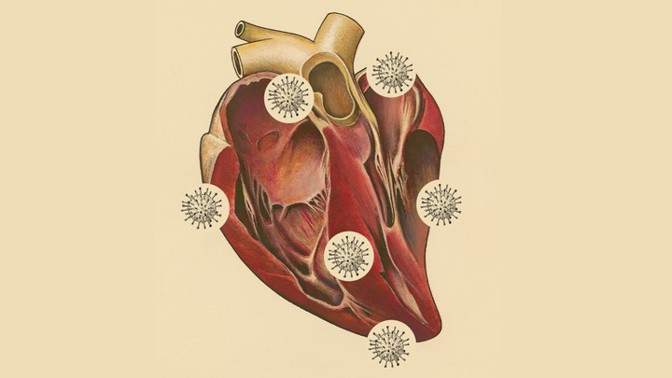
One question, answered: What does COVID-19 do to the human heart?

In his latest, Ed Yong wades into the debate:

News stories and scientific articles have spun a narrative about a bizarre virus that behaves like no other, and a supposedly respiratory illness that should perhaps be reconsidered as a vascular disease. But several cardiologists and virologists I’ve talked with say such claims are overblown.

Keep reading.

42 days remain until the 2020 presidential election. Here’s today’s essential read:

We’re a week out from the first presidential debate. “Almost every Democratic operative I’ve spoken with in the past few weeks remains petrified that Biden is going to bungle the debates in a way that costs him the election,” our politics staff writer Edward-Isaac Dovere reports.

What to read if … you need a break from the news:

One sperm donor. 36 children. A mess of lawsuits. Read Sarah Zhang on the case of Donor 9623.


Did someone forward you this newsletter? Sign up here.


from The Atlantic https://ift.tt/3mJ3E0P

Friday, 18 September 2020

What Ruth Bader Ginsburg’s Death Means for America

A furious battle over a Supreme Court vacancy is arguably the last thing the United States needed right now.

The death of Justice Ruth Bader Ginsburg today represents a devastating loss for feminists who held up the 87-year-old as an icon of women’s rights, and as a bulwark protecting abortion rights and a wide range of other progressive ideals on a conservative Supreme Court.

But her passing less than two months before the presidential election also tosses one more lit match into the tinderbox of national politics in 2020: It will surely inflame a deeply polarized country already riven by a deadly pandemic, a steep economic downturn, and civil unrest in its major cities.

In Washington, the vacancy fight could ratchet up tensions to a level unseen even in the tumultuous Trump era. President Donald Trump will be eager to fill Ginsburg’s seat immediately, seizing an opportunity to rally his base before the election and to cement his legacy in the event he is defeated in November. He could also become the first president since Richard Nixon to install three justices on the high court in a single four-year term. Senate Majority Leader Mitch McConnell has already indicated he’s ready for another confirmation battle, either before or immediately after the election. Republicans might be hard-pressed to consider and approve a Trump nominee in the eight weeks before November, but even a victory by Vice President Joe Biden and a Democratic takeover of the Senate might not prevent Trump from successfully appointing another justice. Republicans would still control both the White House and the Senate until a new Congress takes office in early January.

Moreover, McConnell has insisted that the precedent he created to deny former President Barack Obama’s nomination of Judge Merrick Garland in the final year of Obama’s term—in a vacancy that occurred nearly nine months before the 2016 election—no longer applies, because the same party controls both the White House and the Senate majority. “Oh, we’d fill it,” the Kentucky Republican promised in May 2019, more than a year before Ginsburg announced the cancer recurrence that took her life. Never mind that the rationale McConnell gave at the time—that voters should have the chance to weigh in on their next Supreme Court justice—would seem to apply even more strongly during an election in which the first ballots have already been mailed.

[Read: Mitch McConnell’s grand plan was obvious all along]

The more salient question is not whether McConnell would try to confirm Trump’s nominee but whether his GOP majority would go along with it—either before the election ends in November or in a lame-duck session of Congress afterward. A number of Republican senators have already said they’d want to fill a Supreme Court vacancy if Trump is still in office. But McConnell would need the votes of 50 out of his 52 members to allow Vice President Mike Pence to break a tie (assuming all Democrats voted against Trump’s nominee), and the numbers may not be on his side. One Republican, Senator Lisa Murkowski of Alaska, already voted against the president’s last Supreme Court nominee, Brett Kavanaugh, who won confirmation by a single vote in 2018. Another, Senator Susan Collins of Maine, supported Kavanaugh but is now in danger of losing her bid for a sixth term this fall. And a third Republican, Senator Mitt Romney of Utah, voted to convict Trump during the president’s impeachment trial earlier this year; having already tried to remove Trump from office, Romney might be disinclined to give him another lifetime appointment to the Supreme Court.

The Supreme Court has now seen three vacancies in the last five years. Because of her age and ill health, Ginsburg’s is the least surprising. But it may be the most consequential. Justice Antonin Scalia’s 2016 death did not change the balance of power on the court (he was replaced not by Garland but by the conservative Justice Neil Gorsuch), and Kavanaugh is only somewhat more conservative than the justice he succeeded, Anthony Kennedy, who was an appointee of President Ronald Reagan. Should Trump pick Ginsburg’s replacement, however, the ideological shift rightward it represents would likely be the largest for a single Supreme Court seat since the conservative Clarence Thomas succeeded the liberal Thurgood Marshall nearly three decades ago. And that opportunity could be too enticing for Republicans to pass up.

McConnell, backed by the Senate Republicans who have ratified his decisions, has shown above all a willingness to wield power to its fullest extent when it comes to the federal judiciary, to interpret as widely as possible the Constitution’s delegation to the Senate of the authority to “advise and consent” on presidential nominations. He cares more about the confirmation of conservative judges than anything else the Senate does, and historically, conservative leaders and voters have seemed to care more about the judiciary, and the Supreme Court, than their progressive counterparts. Republicans saw the vacancies on the high court during both the 2016 and 2018 elections as boosting their base’s turnout, including in key Senate races, while Democrats were unable to parlay the anger over McConnell’s handling of Garland into sufficient turnout to elect Hillary Clinton or a Democratic Senate majority four years ago.

Republicans may hope the vacancy caused by Ginsburg’s death will have the same mobilizing effect this year, especially in states like Arizona, North Carolina, Iowa, Maine, and Colorado, where both Trump and GOP Senate candidates are at risk of losing. But the Ginsburg seat holds even more significance for Democrats, who have panicked about her health scares and advancing age for years. They fear not only the rollback of progressive gains—including restrictions on abortion rights and the possible invalidation of the Affordable Care Act—but also the potential that a 6-3 conservative majority could hand Trump virtually unchecked power or overturn any major achievement a President Biden could hope to accomplish. The vacancy thus might provoke the turnout boost for Democrats that previous court battles did not, as well as a push for retribution if Republicans are seen as ignoring the will of the voters. A successful GOP effort to replace Ginsburg with a conservative before or immediately after a Democratic victory will almost certainly lead to more progressive calls for Biden—along with a willing Democratic Senate—to simply pack the Supreme Court with more seats to offset the conservative advantage.

The stakes of the next two months—with hundreds dying daily from the coronavirus, with an incumbent president fanning violence and undermining the integrity of a national election—could hardly have been higher before Ruth Bader Ginsburg succumbed to cancer. Into that cauldron now goes a Supreme Court fight, with an outcome that could alter American society not only for the next four years, but for a generation to come.


from The Atlantic https://ift.tt/33KQwzu

Watch: Blood donors get a Halloween fright in Thailand

Thai Red Cross workers dressed up as part of a Halloween-themed blood drive in the country's capital Bangkok. from BBC News https://if...